Generative AI for East Asian Studies
Why GenAI for Humanities Studies:
Essential Concepts about LLMs
Kwok-leong Tang
Harvard University
A.I. in East Asian Studies Workshop · Ohio State University · April 2026
Today’s Agenda
Disclaimer
Kwok-leong Tang and the Digital China Initiative (Harvard University) have no financial interest in, nor receive compensation from, any of the tools, models, or software used in this workshop.
References to specific products (LM Studio, Ollama, Antigravity, Claude Code) are for research and educational purposes only and do not constitute endorsement by Harvard University.
About Me
A Historian, Not a Computer Scientist
Three degrees in history and Asian Studies
Research focus: late imperial China, Confucian temples
Did not apply many digital methods in PhD dissertation
About Me
How I Got Here
I make my living by teaching and helping others use digital tools and methods in their research — I am biased!
Why Did DCI Shift to LLMs?
LLMs, Generative AI, and AI
These terms are often used interchangeably — but they are not the same.
Artificial Intelligence
Machines that perform tasks requiring human-like intelligence
Machine Learning
Systems that learn from data rather than explicit rules
Large Language Models
Trained on massive text to predict the next token
Generative AI
AI that generates new content: text, images, code, audio
A Brief History
For Decades, AI Meant This…
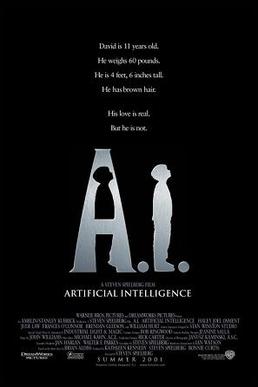
Spielberg’s A.I. Artificial Intelligence (2001) — a robot child who wants to become “real.”
HAL 9000. Skynet. Ex Machina.
Popular culture imagined AI as sentient machines.
The reality of AI in 2026 is very different:
not sentient, but remarkably useful.
2012
ImageNet and the GPU Revolution
AlexNet wins the ImageNet competition by a wide margin — deep neural networks, powered by GPUs, suddenly outperform all traditional methods.
The lesson: scale + compute = breakthrough
Mid-2010s
Machine Learning Takes Off
Image recognition, speech recognition, recommendation systems, self-driving cars
For humanities scholars, the barrier remained: you needed labeled data and programming skills — both scarce in our fields.
2017
The Transformer
“Attention Is All You Need”
Google Brain, 2017
A new architecture that processes entire sequences in parallel — the foundation of every modern LLM: GPT, Claude, Gemini, DeepSeek, Qwen.
November 2022
ChatGPT
100M
users in two months — the fastest adoption of any technology in history
For the first time, anyone could interact with AI through natural language.
From Chatbot to AI Agent
2022
Chatbot
ChatGPT — ask questions, get answers in a chat window
2023–24
Copilot
GitHub Copilot, Cursor — AI assists you inside an editor
2025–26
AI Agent
Claude Code, OpenClaw, Antigravity — acts autonomously, uses tools
From conversation → collaboration → delegation
Why AI Matters for Humanities Studies
Adopting digital tools in East Asian Studies has faced persistent barriers
Challenge 1
No Rice, No Meal
巧婦難爲無米之炊
“Even the cleverest housewife cannot cook without rice”
OCR for woodblock prints and manuscripts was unreliable for decades. Without digitized text, computational analysis was impossible — no matter how good the method.
Challenge 2
Not Everyone Does Quantitative Research
Scholars of close reading have long viewed digital tools as irrelevant to their interpretive work.
When “digital humanities” meant counting words and drawing network graphs, it was hard to imagine how it applied to close reading.
But what if the tool could do more than count?
Challenge 3
Platforms Built for Someone Else’s Question
Most DH platforms in Chinese Studies — CBDB, CHGIS, MARKUS, DocuSky — grew from the research interests of their creators.
Each platform has its own interface, its own logic, its own assumptions about what you’re trying to do — then was gradually generalized to cover other problems.
What if you could build your own?
Challenge 4
Cutting the Foot to Fit the Shoe
削足適履
“Cutting one’s foot to fit the shoe”
Every research project has unique workflows, unique data, unique questions. Scholars need custom tools — but developer hours have always been too expensive.
Challenge 5
The Opportunity Cost
Time spent labeling data & training models
Time spent learning tools & debugging code
vs.
Time spent reading sources & writing papers
Digital tools are not essential to humanities research. The rational choice was clear — most scholars chose to read more and write more instead.
A Critical Concept
The Jagged Frontier of AI
AI has a jagged frontier — it is good at some things that seem very hard and bad at some things that seem really easy for humans.
— Ethan Mollick, Wharton
Surprisingly Good At
- Writing code from natural language
- Translating classical Chinese
- Synthesizing 100-page documents
- Complex reasoning & analysis
- Drafting grant proposals
Surprisingly Bad At
- Counting words or letters
- Simple spatial reasoning
- Basic arithmetic with large numbers
- Following rigid formatting rules
- Knowing what it doesn’t know
The frontier is invisible — you must always verify.
Dell’Acqua et al., “Navigating the Jagged Technological Frontier,” Harvard Business School, 2023
Breakthrough
Improvement in OCR
New OCR models in 2025–2026 have dramatically improved recognition of historical CJK texts:
Dots OCR
Rednote
PaddleOCR-VL
Baidu
DeepSeek OCR
DeepSeek
Chandra
Datalab
Vision models (e.g., Gemini 2.5 Pro) can also perform OCR when you upload an image.
The Vision
Think of Tony Stark and Jarvis

“Jarvis, scan the model”
Data retrieval
“Color code every causeway, footpath…”
Cleaning & categorization
“Lose the landscaping, the shrubbery…”
Filtering & analysis
“Structure the protons and neutrons”
Visualization & discovery
The full cycle of knowledge production — through natural language alone.
That’s not science fiction anymore.
Preview: Session 3
Vibe Coding
“There’s a new kind of coding I call vibe coding, where you fully give in to the vibes, embrace exponentials, and forget that the code even exists.”
— Andrej Karpathy, February 2025
Collins Dictionary Word of the Year 2025
Describe what you need → AI generates the code → you verify with your expertise
Example: a student-built China Map Quiz App — created entirely through vibe coding
We will explore this in depth in Session 3 this afternoon.
A Different Perspective
Not Replacing Humans —
Restructuring Work
The Common Fear
“AI will take away jobs”
→
What’s Actually Happening
GenAI is breaking down the division of labor and the establishments built to serve the pre-2022 means of production
A single scholar can now do what used to require a developer, a designer, and a data analyst.
The question is not “who loses their job?” but “what can each person now accomplish?”
Energy & AI
What Data Centers Actually Power
Total data center electricity: ~415 TWh (2024) — comparable to the United Kingdom. But AI is only a slice:
Streaming & Media — ~125 TWh
Netflix, YouTube, TikTok, Spotify — comparable to Belgium
Cloud & Enterprise — ~145 TWh
AWS, Azure, Google Cloud, email, file storage — comparable to the Netherlands
Social, Email, etc. — ~85 TWh
Facebook, Instagram, Gmail, Slack — comparable to Portugal
AI / ML — ~40–60 TWh
Training, inference, chatbots, AI search — comparable to New Zealand
AI today uses about as much electricity as New Zealand — not the UK.
Sources: IEA (2025); Patterson et al. (2022), Google & UC Berkeley
For Comparison
Cryptocurrency Mining: The Elephant in the Room
175 TWh
per year — comparable to Argentina
That’s 3–4× more than all AI
67%
from fossil fuels
Coal alone provides 45%
12+ yrs
largely unchecked
Since 2013. Largely unquestioned.
95%+ of crypto transactions are speculation. No scientific advancement, no educational tools, no accessibility gains.
Sources: Cambridge CBNSI; IEA; United Nations University, 2023
A Way Forward
Redirect Energy & Think Local
Repurpose Crypto Infrastructure for AI
CoreWeave: mining → GPU cloud = 60× revenue growth
Core Scientific: 100 MW mining → AI = $8B contract
10 MW of AI GPUs = revenue of 100 MW of Bitcoin mining
Run Local Models on Your Own Machine
Tools like LM Studio and Ollama let you run models on a laptop — less energy than your desk lamp, with full data privacy.
The real question is not how much energy — but what does humanity get back?
Questions?
Ask about anything from Session 1 — concepts, concerns, or what’s coming this afternoon.